The Costs of Conversation: Obstacles to Peace Talks in Wartime by Oriana Skylar Mastro
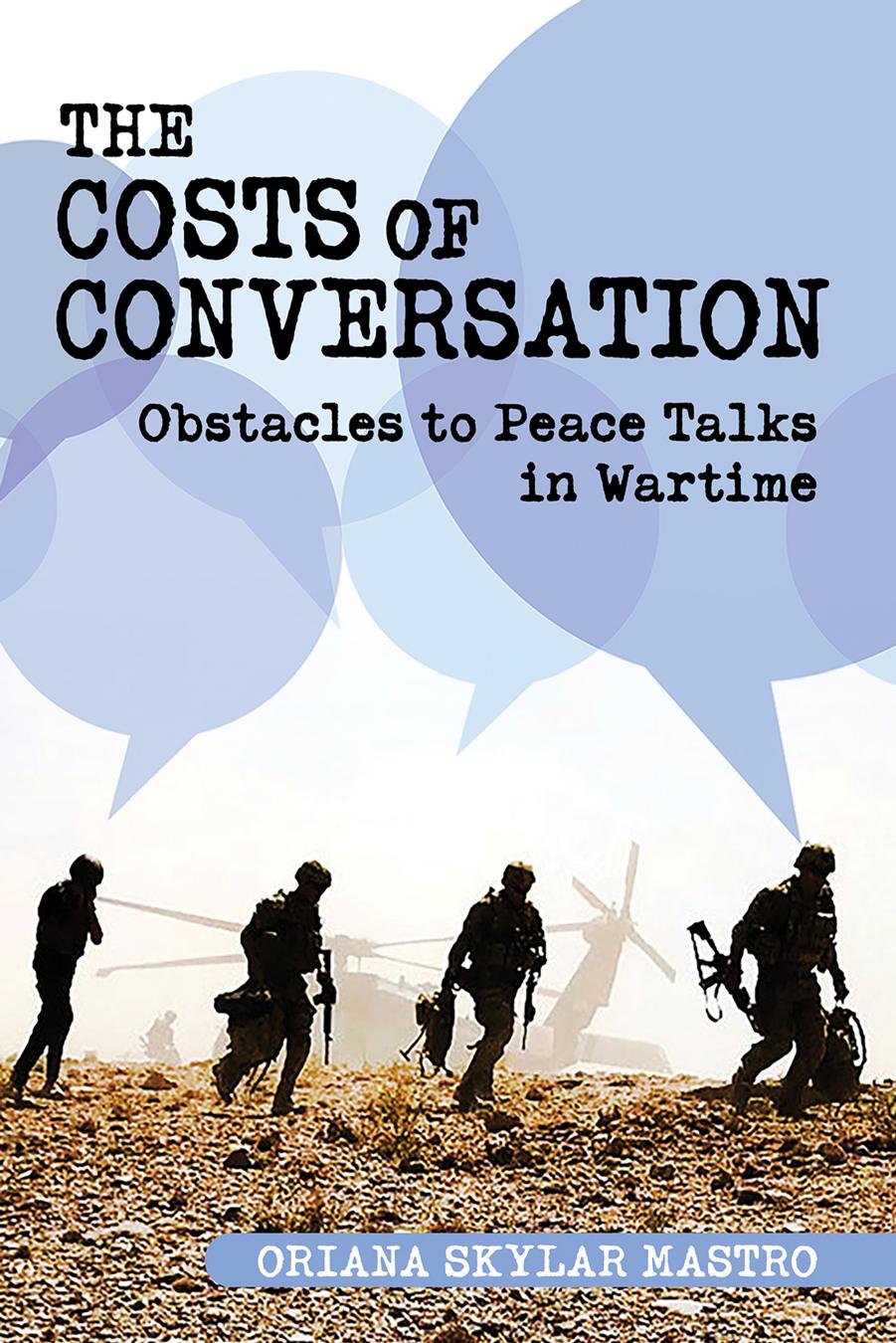
Author:Oriana Skylar Mastro [Mastro, Oriana Skylar]
Language: eng
Format: epub, pdf
Tags: International Relations, Diplomacy, General, Military, Political Science, History, Security (National & International)
ISBN: 9781501732218
Google: 5Yx8DwAAQBAJ
Goodreads: 39951739
Publisher: Cornell University Press
Published: 2019-03-01T00:00:00+00:00
THE HIGH LIKELIHOOD OF ADVERSE INFERENCE, 1966
In a series of internal authoritative speeches and writings, the DRV leadership promulgated the position that while talks would emerge at some point, the timing was not ripe in 1966 because Hanoi had yet to demonstrate its ability to resist US coercive efforts.39 That the United States consistently intensified its efforts and refused to adhere to Hanoiâs preconditions suggested to the North the United Statesâ continued confidence in its superior numbers and firepower.40 Brigadier General Tran Doâs speech on the Winter-Spring campaign of 1966â67, disseminated to high-level political and military cadre in the South in early August, also emphasized that Washington had not yet reached the point where the setbacks it had experienced would induce a change in its perceptions about whether Hanoi would break under military pressure.41
Given this, Hanoi was gravely concerned that the United States would interpret an expression of interest in talks in 1966 as a sign of weakness. In the words of General Vinh, âWe must put forth conditions to prove that we fight for the aspirations and interests of the people,â42 and the failure to do so before talks was âtantamount to implicitly accepting the Americansâ presence in the South.â43 The first principle of General Vo Nguyen Giapâs strategy was that before talks began, the DRV would not respond to US offers made during bombing pauses to avoid suggesting that the bombing was effective in influencing their behavior.44 The DRV premier articulated, âWe cannot take a position which the United States might understand as a sign of weakness. We have to be very careful.â45
To prevent adverse inference, Hanoi needed to first credibly demonstrate its resiliency. By doing so, Hanoi would convince Washington that ratcheting up its war effort would serve only to increase the cost of war, making an intensification, prolonging, or escalation of the conflict unattractive.46 For General Vinh, this realization would come to Washington when both sides were fighting indecisively so that the utility of talks would shift from a tool of coercion for the United States to a mechanism through which to negotiate a resolution to the conflict.47 In this way, the condition for talks was not to defeat the United States militarily, but to deal the United States enough blows so that Hanoi could enter into talks without looking weak.48 Therefore, top leaders advocated for âhitting the enemy harderâ and âstepping up armed attacks so as to win greater victoriesâ49 prior to initiating talks. As General Vinh asserted, âIn a war between a powerful country which waged aggression and a weak country, as long as we have not yet acquired adequate strength, a situation where fighting and negotiations are conducted simultaneously does not exist.â50
Determining whether the Vietnamese had âaccumulated enough successesâ to show resiliency at any point in time was difficult and contentious. The party had a mixed record at identifying US positions in the past, and therefore commissioned many internal studies with the aim of assessing US resolve and searching for indications of a genuine desire to end the war.
Download
The Costs of Conversation: Obstacles to Peace Talks in Wartime by Oriana Skylar Mastro.pdf
This site does not store any files on its server. We only index and link to content provided by other sites. Please contact the content providers to delete copyright contents if any and email us, we'll remove relevant links or contents immediately.
| Arms Control | Diplomacy |
| Security | Trades & Tariffs |
| Treaties | African |
| Asian | Australian & Oceanian |
| Canadian | Caribbean & Latin American |
| European | Middle Eastern |
| Russian & Former Soviet Union |
The Secret History by Donna Tartt(19088)
The Social Justice Warrior Handbook by Lisa De Pasquale(12190)
Thirteen Reasons Why by Jay Asher(8910)
This Is How You Lose Her by Junot Diaz(6887)
Weapons of Math Destruction by Cathy O'Neil(6280)
Zero to One by Peter Thiel(5802)
Beartown by Fredrik Backman(5754)
The Myth of the Strong Leader by Archie Brown(5507)
The Fire Next Time by James Baldwin(5446)
How Democracies Die by Steven Levitsky & Daniel Ziblatt(5219)
Promise Me, Dad by Joe Biden(5153)
Stone's Rules by Roger Stone(5088)
A Higher Loyalty: Truth, Lies, and Leadership by James Comey(4964)
100 Deadly Skills by Clint Emerson(4925)
Rise and Kill First by Ronen Bergman(4789)
Secrecy World by Jake Bernstein(4753)
The David Icke Guide to the Global Conspiracy (and how to end it) by David Icke(4720)
The Farm by Tom Rob Smith(4512)
The Doomsday Machine by Daniel Ellsberg(4490)
